Traumatic Brain Injury (TBI) is now recognized as
a causative factor for hormonal deficiencies associated with personality changes. Psychological, Physiological,
and Physical manifestations like; depression, anxiety, mood swings, bouts of anger, memory loss, inability to concentrate,
learning disabilities, sleep deprivation, increased risk for heart attacks, strokes, high blood pressure, diabetes, loss of
libido, menstrual irregularities, pre-mature menopause, obesity, loss of lean body mass, muscular weakness, and a number of
other medical conditions can arise subsequent to head trauma. Conventional medications (antidepressants, anti-anxiety, anti-seizure,
anti-psychotic, and narcotics) do nothing to address the underlying causes that create the symptoms associated with
TBI (Post-Concussion Syndrome) because they do not replenish the missing hormones. Many individuals under conventional
treatment become further dysfunctional from the over-load of medications used for treating the superficial complaints. Take some time and review the medical articles
that are being published addressing and acknowledging the association between TBI and Hormonal Dysfunction. Dr.
Mark L. Gordon was the first to provide this relationship on national television after 7 years of sharing the information
that already existed. Dr. Gordon is presently lecturing to other physicians both nationally and internationally
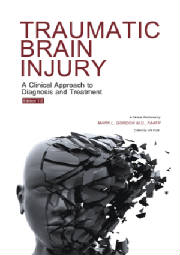
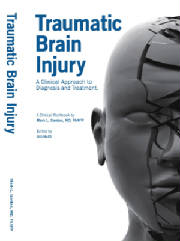
while writing his next book which will become a 3-day workshop entitled: "TBI - A Clinical Approach to Diagnosis and Treatment"
Veterans with TBI Program
|
If you are a returning Veteran from the Gulf War, Iraq
or Afghanistan and have sustained a Closed Head Trauma that is affecting your Quality of Life, my consultation and
the initial hormonal assessment is at no charge to you, your family, or the government. We and therefore I, owe you a debt of gratitude. Allow the Millennium
Health Centers to show you. Please sign into the Veterans with TBI Program by filling in the Intake Form.
Intake Form

There are many that continue to support your needs after
separation. Plastic Surgery and Dentistry.
|
If you are in Law Enforcement
and have sustained a Traumatic Brain Injury please apply for a free assessment. 
The Thin Blue Line We support Law Enforcement with free laboratory testing and reporting.
|
 |
 |
The next step in Interventional Endocrinology
where correction of the underlying hormonal dysfunction can make the difference.
Our area
of expertise includes:
|
TBI - Hormone Dysfunction Syndrome (PCS)
> Sports related head injuries. ( NFL, NHL, MMA, Boxing ) >
Motor Vehicle Accident. > Work related head injuries (WC). > Closed Head Trauma Syndrome. >
Post-Concussion Syndrome. > Post-Traumatic Stress Syndrome. > Blast Trauma (IED). > Repetitive Surgeries. > Post-Stroke Syndrome.
|
|
|
Address the Hormonal Deficiencies:
1) Male TBI Central and Peripheral Hormone Panel 2) Female TBI Central
and Peripheral Hormone Panel
|
TBI: The Military's Approach
ABC 7 News: TBI and Returning Vets
War Veterans Sought for TBI evaluation
Role of the GH/IGF-1 axis in neurogenesis. 2009 Nov 24 Aberg D. Dept of Internal Medicine, Institute of Medicine, Sahlgrenska University Hospital, University
of Gothenburg, Gothenburg, Sweden. The growth hormone/insulin-like growth factor 1 (GH/IGF-1) axis is not only involved in
brain growth, development and myelination, but also in brain plasticity as indexed by neurogenesis. This may have links to
various cognitive effects of GH and IGF-1. GH and IGF-1 affect the genesis of neurons, astrocytes, endothelial cells and oligodendrocytes.
Specifically, IGF-1 increases progenitor cell proliferation and numbers of new neurons, oligodendrocytes, and blood vessels
in the dentate gyrus of the hippocampus. In the adult cerebral cortex IGF-1 only affects oligodendrogenesis. Recently, GH
therapy has also been shown to induce cell genesis in the adult brain. The profile of effects by GH therapy may be somewhat
different than that of IGF-1. In addition, GH secretagogues(GHS) also have neuroprotective and cell regenerative effects per
se in the brain. Finally, transgenic disruptions in GH signaling pathways affect neuron and astrocyte cell numbers during
development and during adulthood. Altogether, data suggest that both exogenous and endogenous GH and/or IGF-1 may be used
as agents to enhance cell genesis and neurogenesis in the adult brain. Theoretically these substances could be used to enhance
recovery after brain injuries. PMID: 19955757
 |